Launch offer — valid today only

📄 Digital book in PDF · read it on your phone or print it

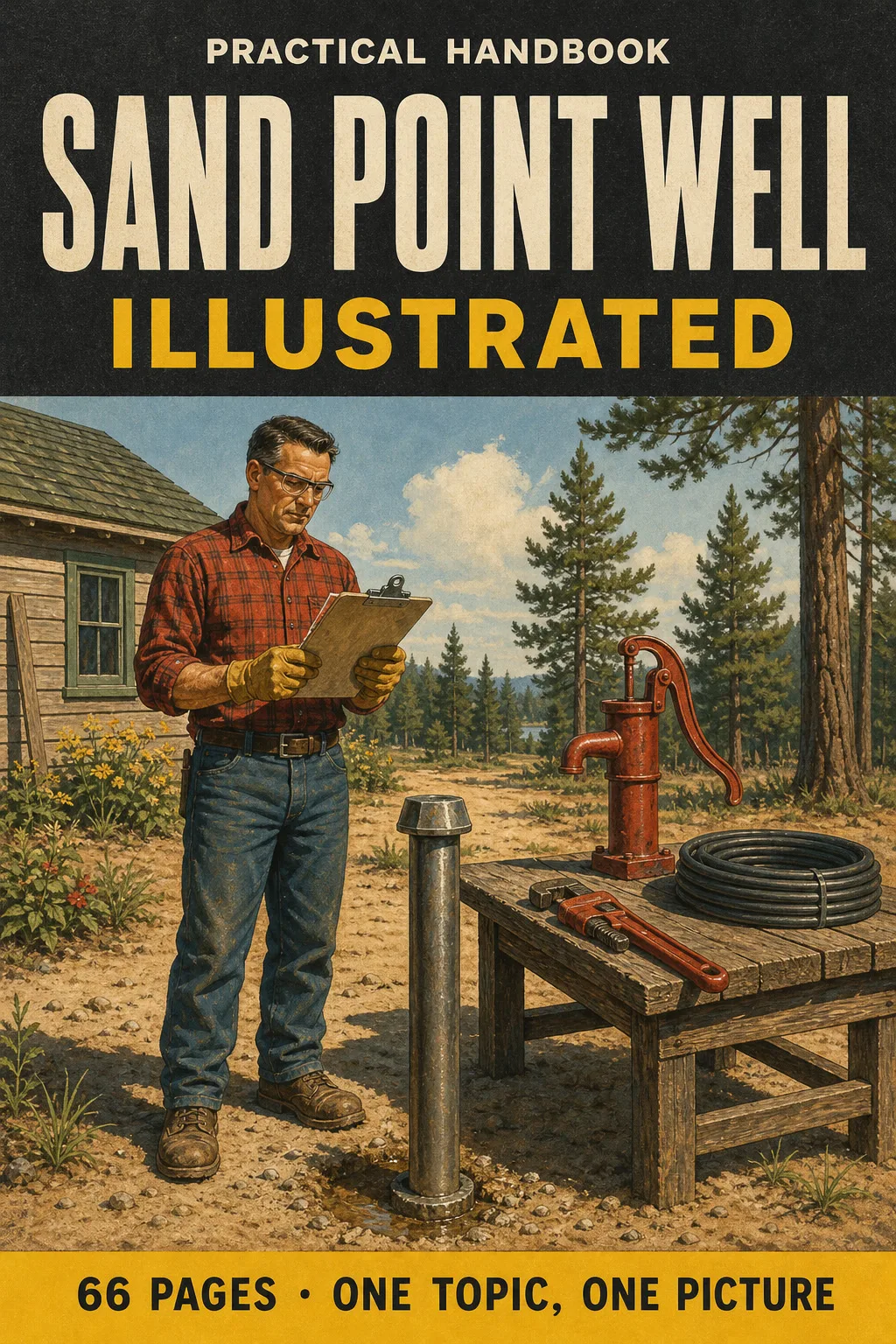
The Sand Point Well, from Water Table to Pump, in Drawings Every Step on Its Own Page

The water table, the 25-foot suction limit, the well point, driving with a post driver, developing the well, priming a jet pump, the bleach dose and winterizing. Every topic has its own page: the drawing first, then what you need to remember. 66 illustrated pages.

START YOUR WELL THIS WAY

🔒 Secure checkout · PDF by email · 30-day guarantee

Every topic, its own pageOne method in 8 steps, each step drawn on its own page
66 illustrated pages8 parts, from how a driven well works to troubleshooting
Up-to-date sourcesChecked against EPA and CDC private well guidance, with what to verify in your state
PDF by emailFormat

Look Inside the Book

Every page has one big drawing and a box with the numbers and steps you need to know:

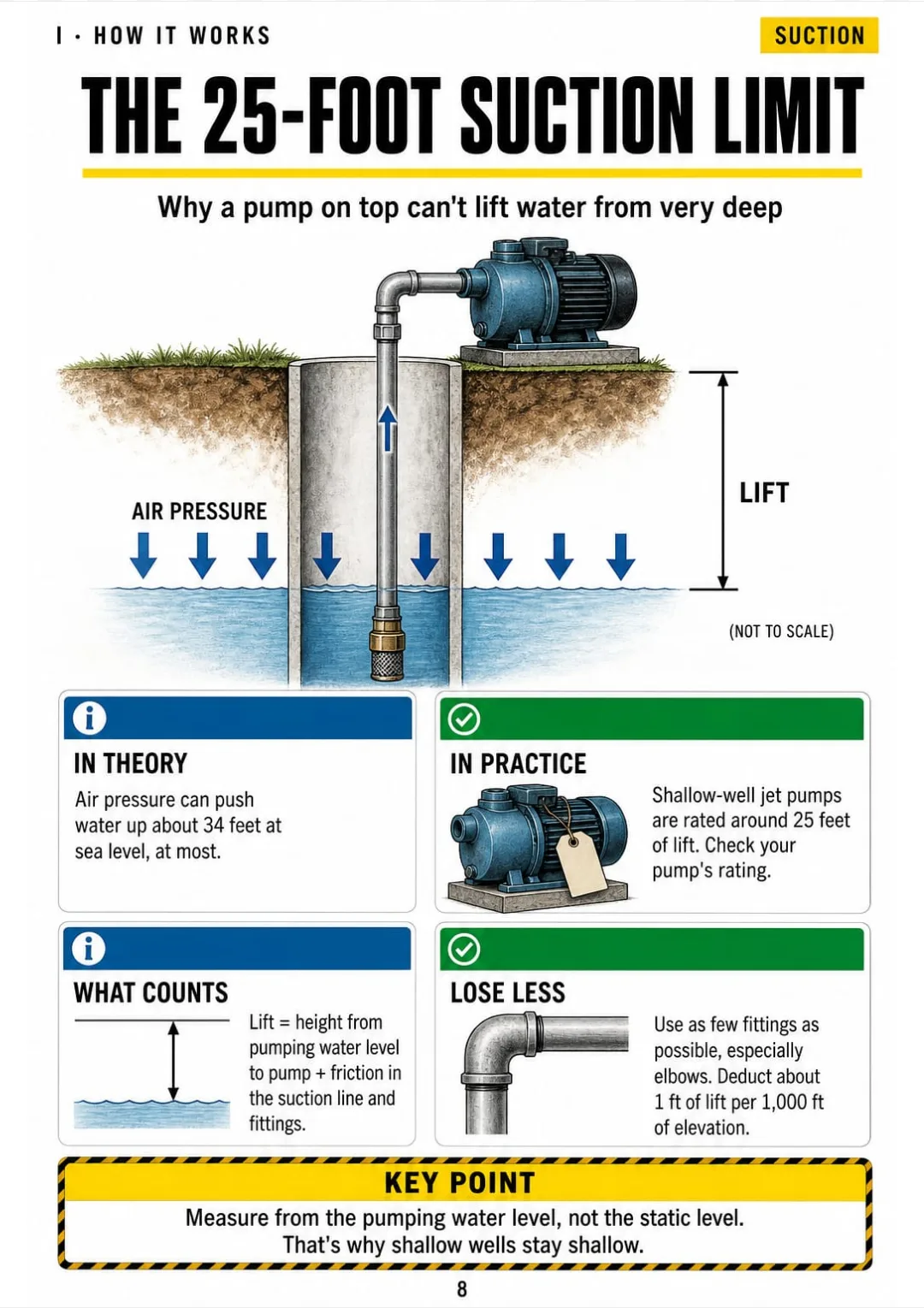
About 34 ft in theory at sea level, about 25 ft in real pumps: check yours
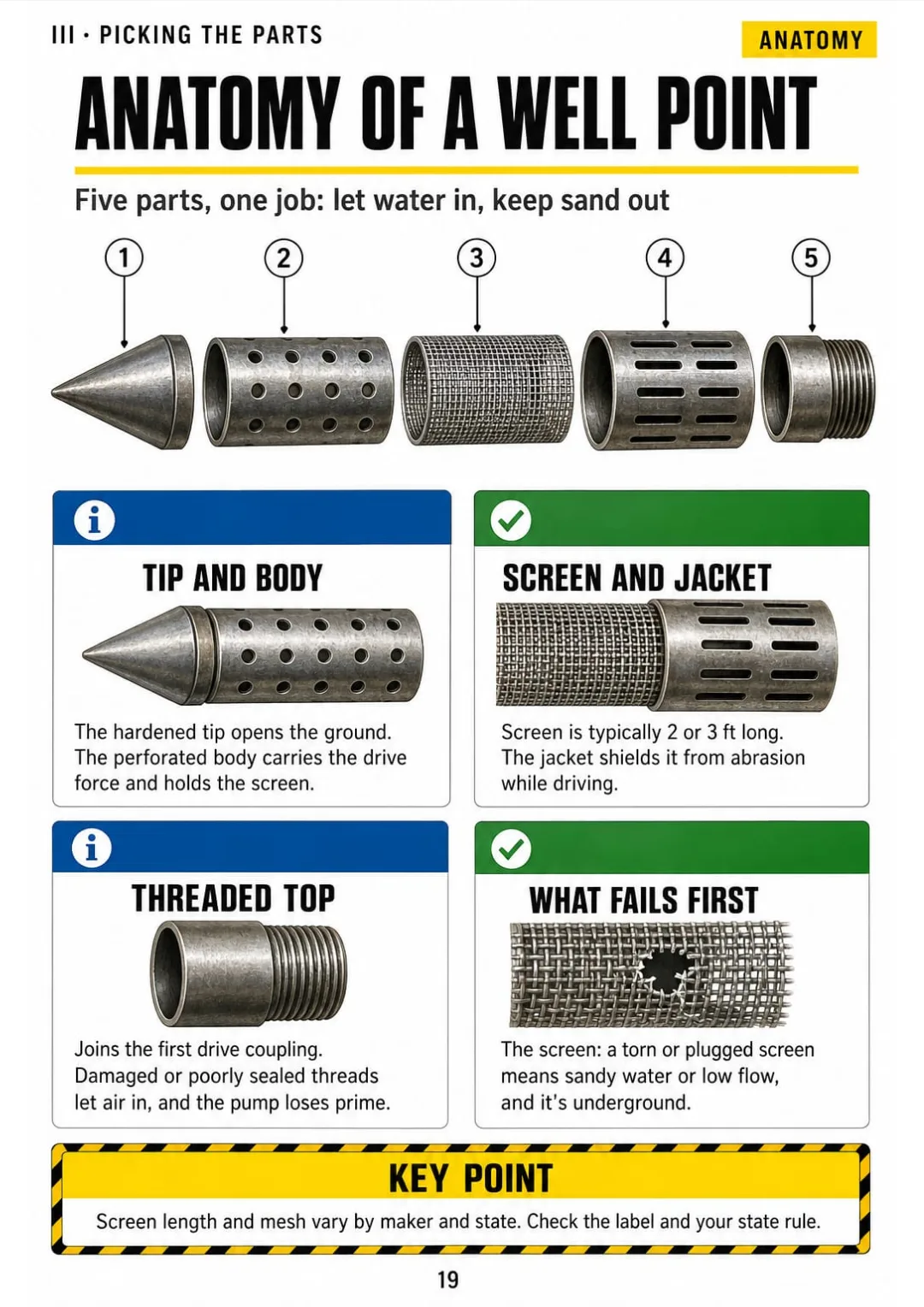
Tip, body, screen, jacket, threads: what each part of a well point does.
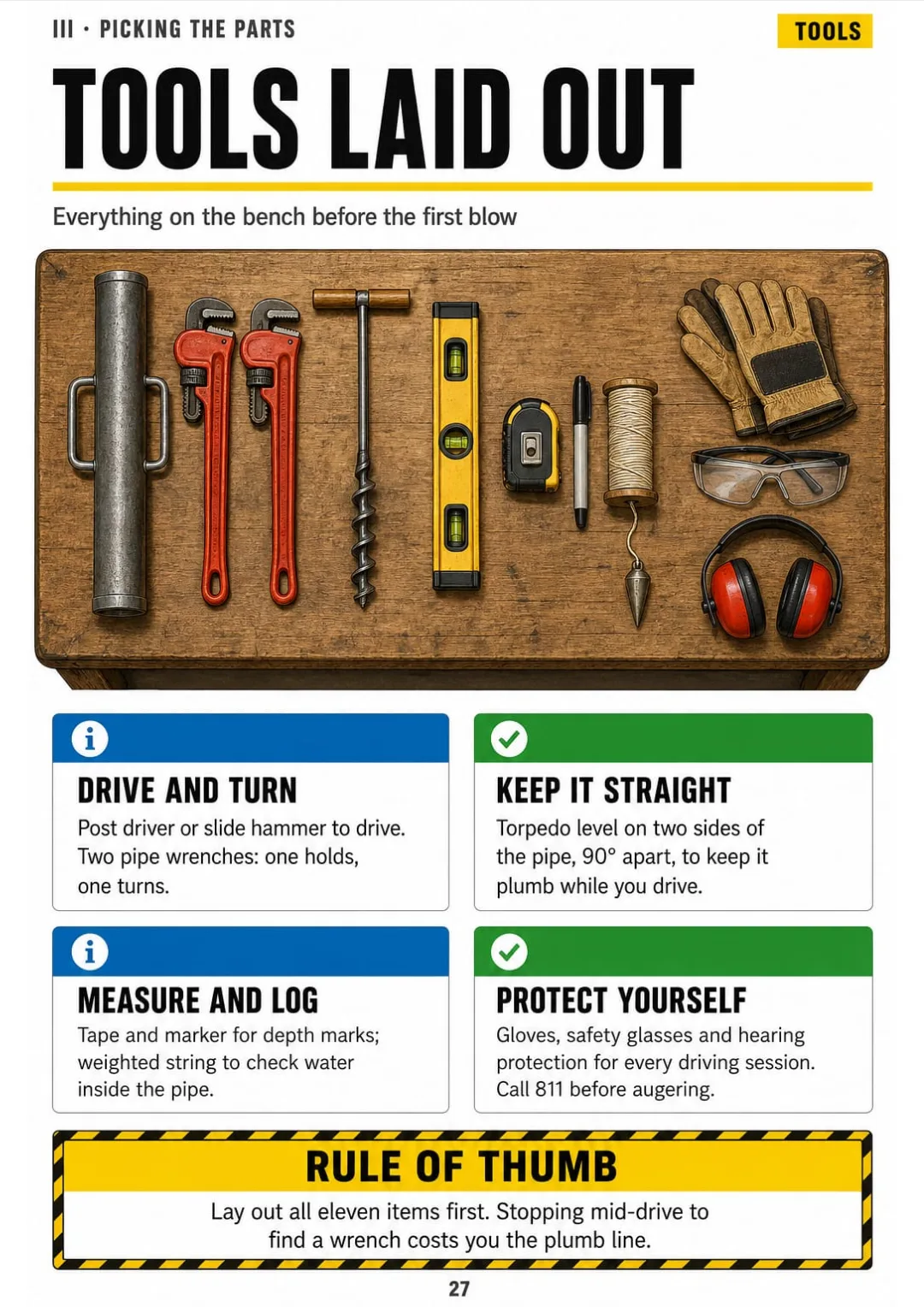
Post driver, two wrenches, level, auger, tape, marker, string and safety gear.
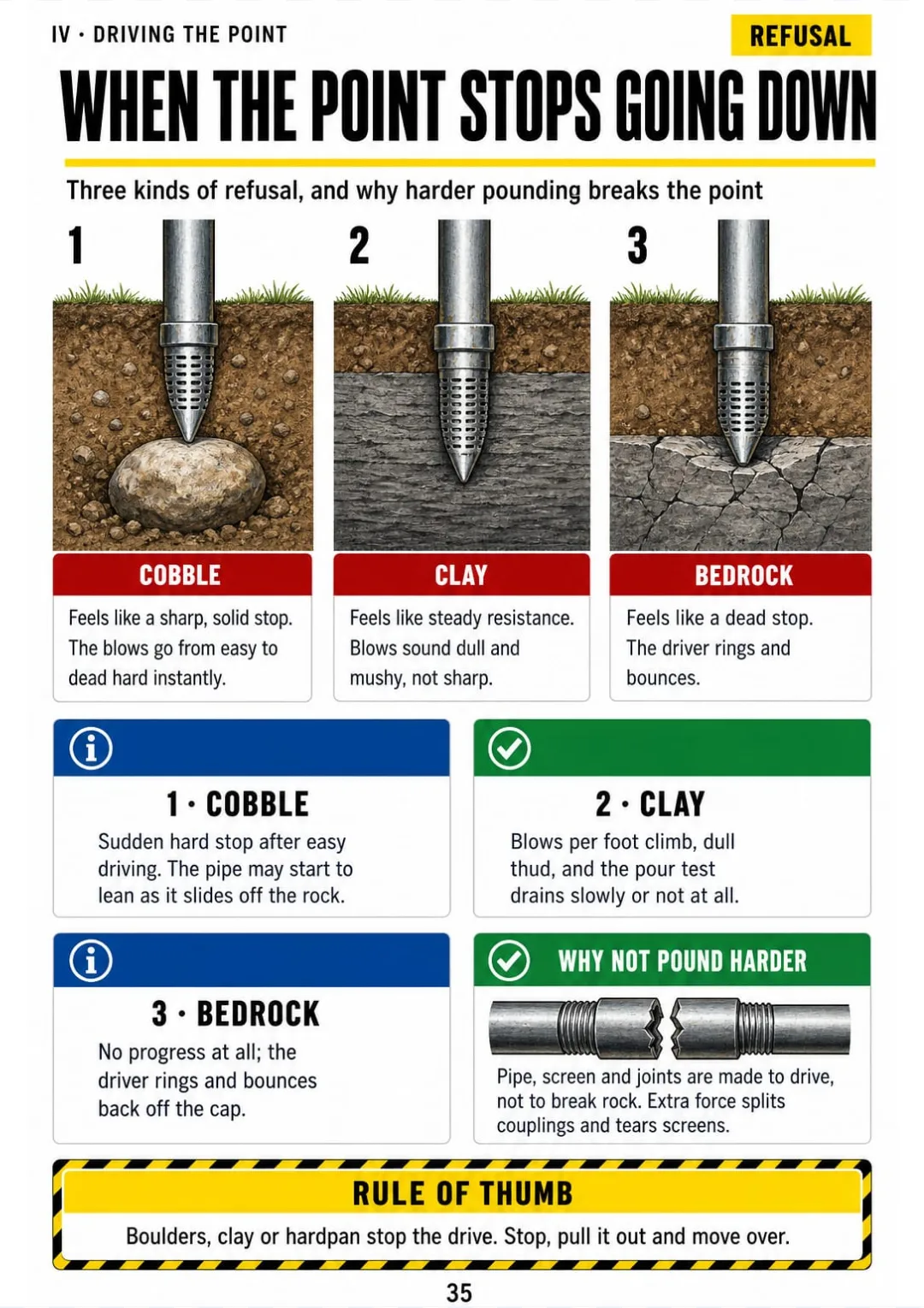
Cobble, clay or bedrock: each feels different, and pounding harder breaks the point
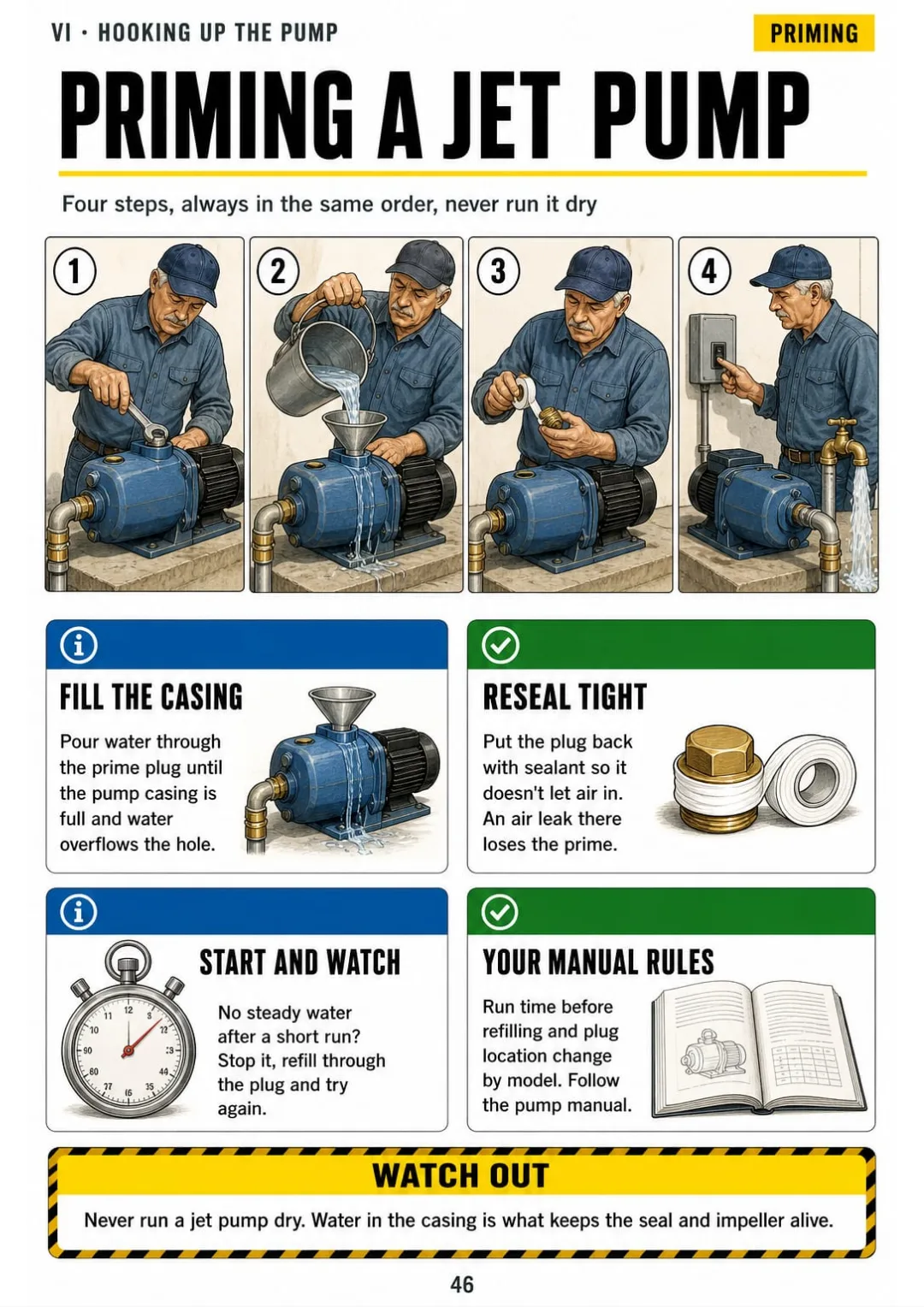
Priming a jet pump in 4 steps: fill, reseal, start, refill. Never run it dry.
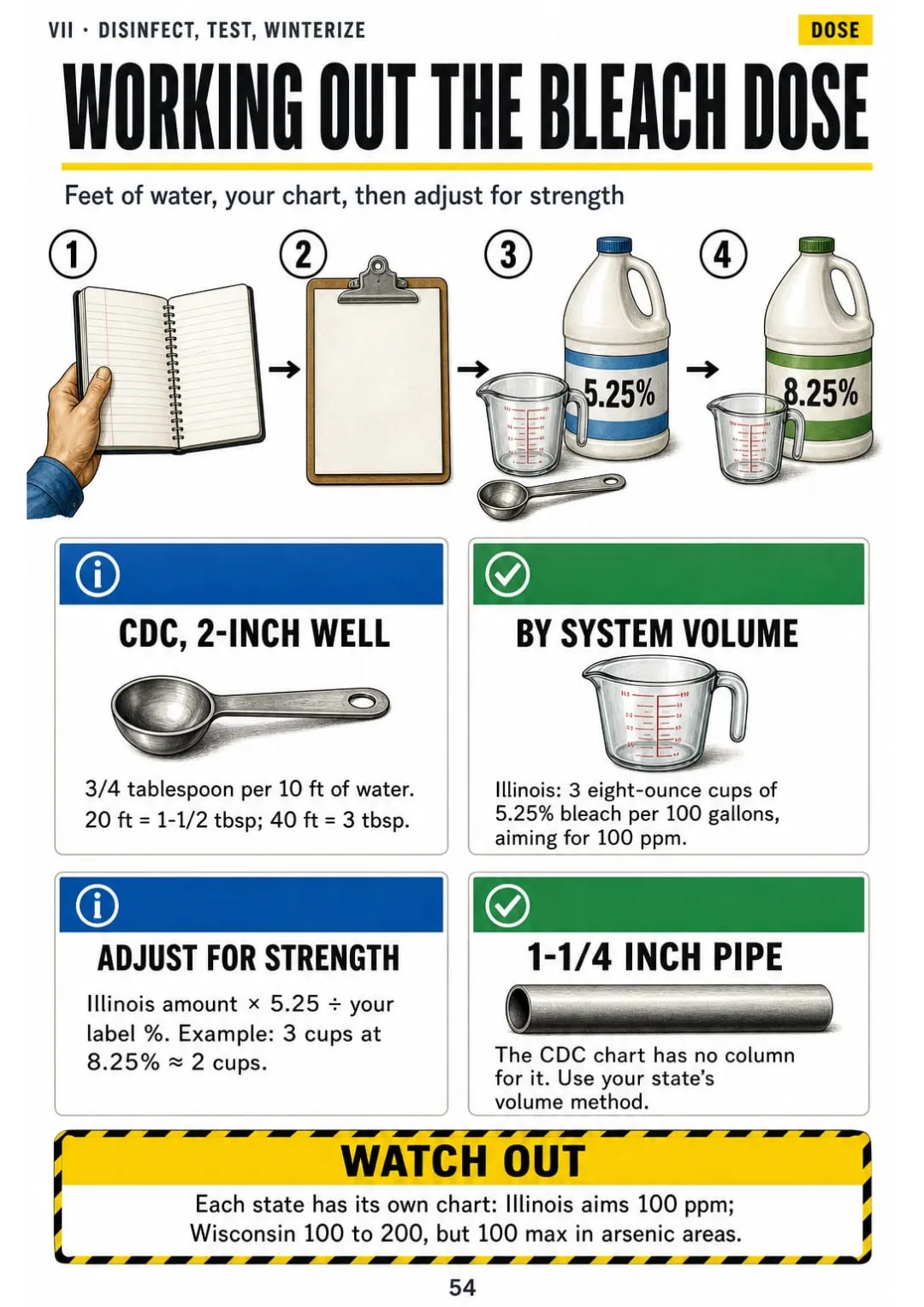
CDC: 3/4 tbsp per 10 ft in a 2-inch well; scale state charts by 5.25 ÷ your %.
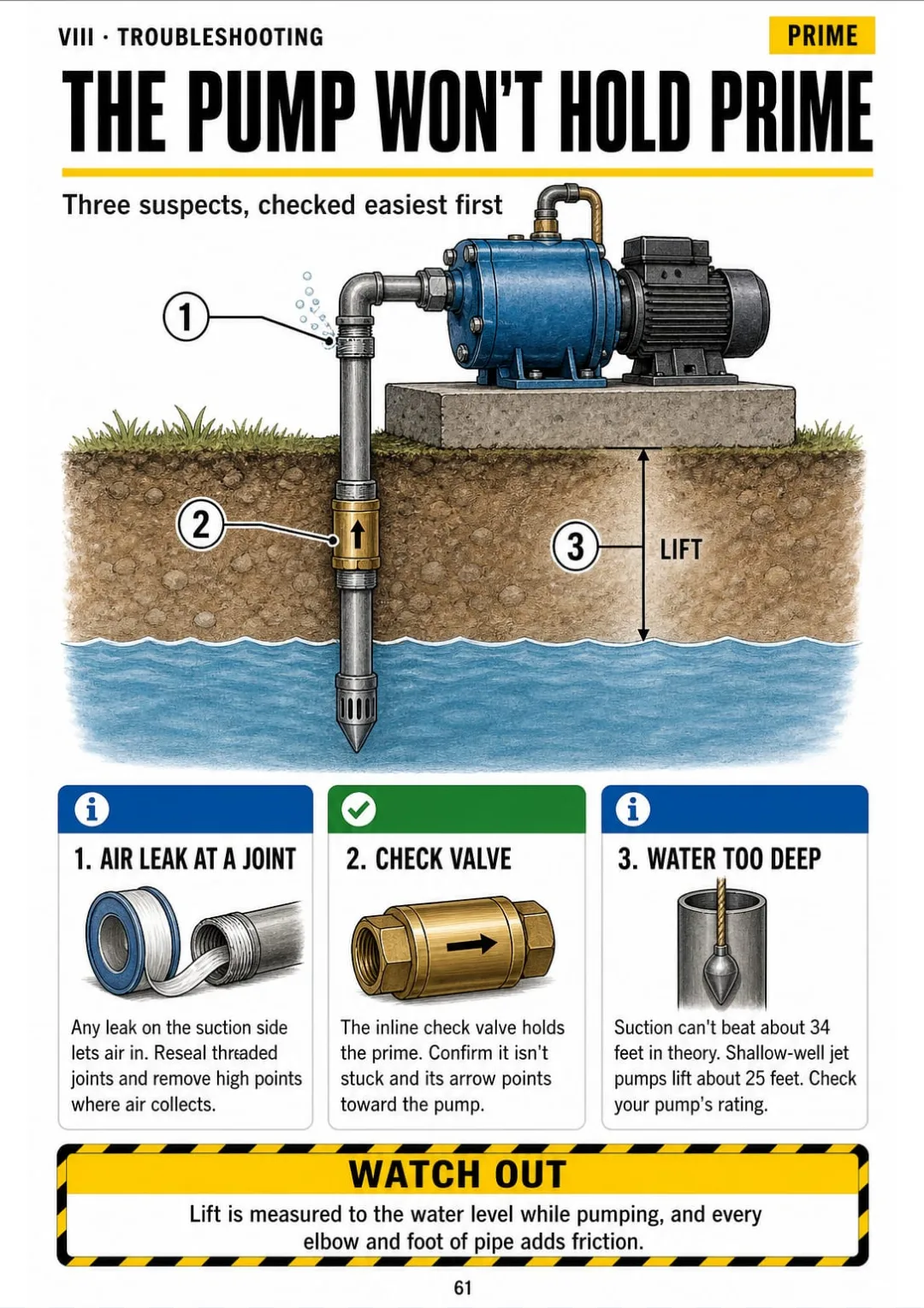
Losing prime: air leak, check valve, or water below the ~25 ft suction limit
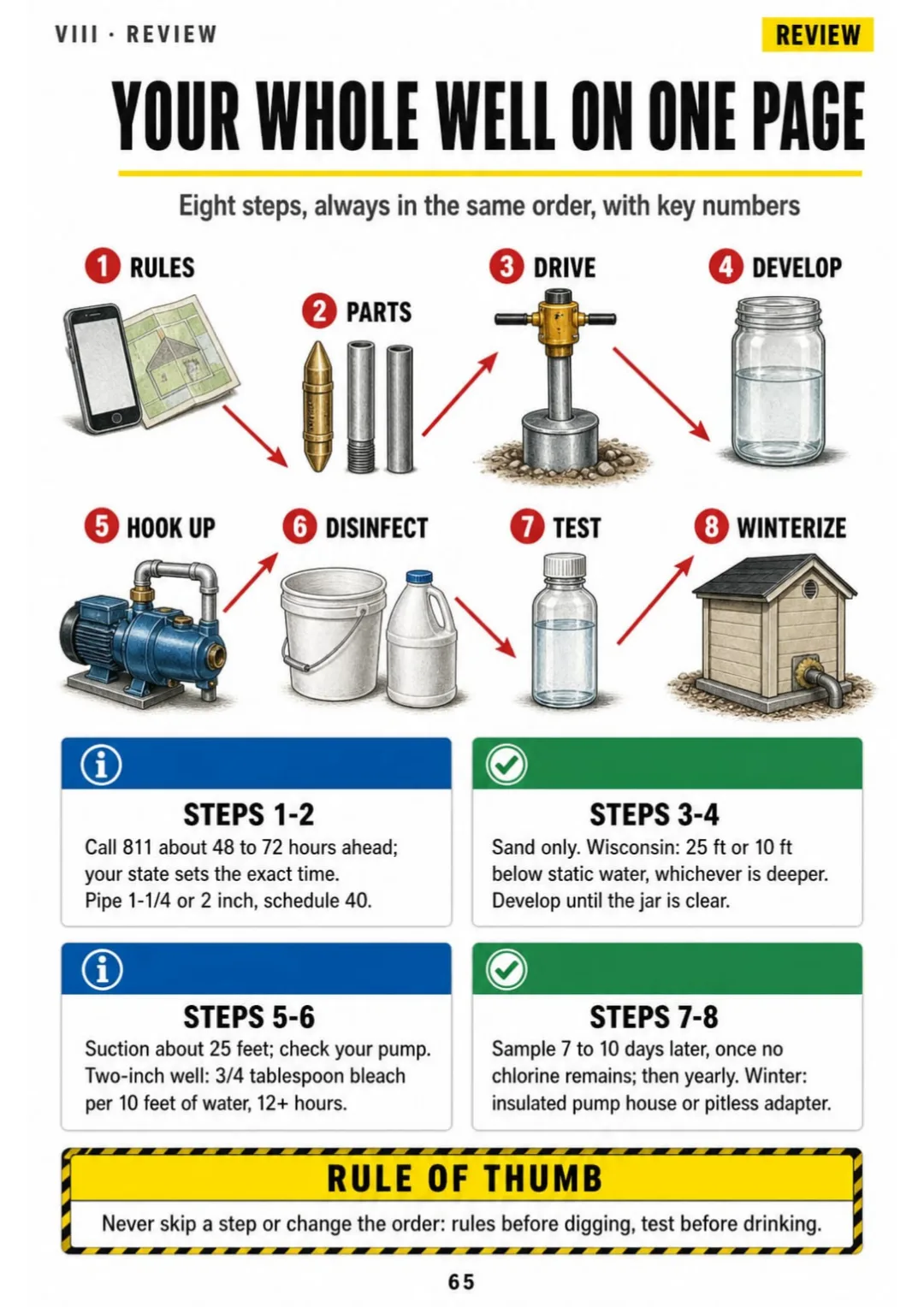
8 steps in order: rules, parts, drive, develop, hook up, disinfect, test, winterize

Swipe to see more →

These are real pages from the book. The table of contents is the full one: 8 parts and 62 topics.

The Problem Isn't You. It's How It Was Explained.

You're at the hardware store with a cart and a list pieced together from three videos, and you can't tell if you have everything you need to drive the point.

The guide you printed covers tools in two long paragraphs: a driver, some wrenches, a level "as needed." Nothing tells you what you need on day one and what you'll miss with the point halfway down.

Post driver, two wrenches, level, auger, tape, marker, string and safety gear.

In the book, the tools are one page: post driver, two pipe wrenches, level, hand auger, tape, marker, string and safety gear, laid out and labeled, each with what it's for.

Same with the rest: the water table, the anatomy of a well point, priming a jet pump, the bleach dose. Each one has its own page.

You load the truck once, drive the point in order, and you get it done without going back to the manual.

COMPARE FOR YOURSELF

Same Topic, Two Ways to Learn It

THIS
  • The manual: lines and lines of text
  • Well point parts explained in words only
  • You get to the yard with doubts
A well point is a perforated or slotted pipe assembly fitted with a hardened conical drive tip at its lower end, designed to penetrate unconsolidated water-bearing formations under repeated impact loading. The body, commonly of galvanized steel, supports a perforated or wire-wound screen, which may be enclosed by an outer jacket of brass or stainless mesh whose opening size should be selected with reference to the grain size distribution of the aquifer material, while the upper end is furnished with tapered threads for connection to the drive pipe.
FOR THIS
  • The well point in one cutaway drawing
  • Each part and its job in a box
  • You see it and you get it
Tip, body, screen, jacket, threads: what each part of a well point does.
CONTENTS

Take a Look at the 8 Parts and 62 Topics

How a driven well works, ground and rules, picking the parts, driving the point, developing the well, hooking up the pump, disinfecting, testing and winterizing, and troubleshooting: 66 pages, all illustrated

IHow a Driven Well Works · pp. 5-10
  1. What a sand point well is
  2. The water table, drawn
  3. Why sand works and clay doesn't
  4. The 25-foot suction limit
  5. Driven, dug or drilled: which one you need
  6. What a sand point can and can't do
IIBefore You Drive: Ground and Rules · pp. 11-18
  1. Check your state and county rules first
  2. Call 811 before you dig
  3. Setback distances from septic and fuel
  4. Reading your land
  5. Using well logs and neighbors' wells
  6. The hand auger test hole
  7. Soil by hand: sand, silt or clay
  8. Picking the exact spot
IIIPicking the Parts · pp. 19-27
  1. Anatomy of a well point
  2. Screen mesh vs your sand
  3. Brass, stainless or galvanized point
  4. 1-1/4 inch or 2 inch
  5. Drive pipe and drive couplings
  6. The drive cap: never hit the threads
  7. Thread sealant done right
  8. Your shopping list, worked out
  9. Tools laid out
IVDriving the Point · pp. 28-36
  1. Start with a pilot hole
  2. Keeping it plumb
  3. Driving with a post driver
  4. Adding a section
  5. Mark the pipe and keep a log
  6. Have you hit water? Two tests
  7. How far past the water table
  8. When the point stops going down
  9. Pulling a point back out
VDeveloping the Well · pp. 37-42
  1. What development does
  2. First water
  3. Surging
  4. Backflushing
  5. The clear water jar test
  6. Measuring your flow
VIHooking Up the Pump · pp. 43-50
  1. The pitcher pump
  2. How a shallow-well jet pump works
  3. Where the check valve goes
  4. Priming a jet pump
  5. The suction line: zero air leaks
  6. Pressure tank and switch
  7. Power and wiring safety
  8. Protecting the wellhead
VIIDisinfect, Test, Winterize · pp. 51-59
  1. Why you shock a new well
  2. How much water is in your pipe
  3. Choosing the bleach
  4. Working out the bleach dose
  5. Circulate, wait, flush
  6. Testing the water
  7. Reading the lab report
  8. Freeze protection
  9. Spring start-up and fall shut-down
VIIITroubleshooting and Review · pp. 60-66
  1. Sandy water
  2. The pump won't hold prime
  3. Low flow
  4. Iron, rotten-egg smell and odd taste
  5. The most frequent mistakes, before and after
  6. Your whole well on one page
  7. What to verify with your state and county

One Page, One Topic, All Clear

Think of it this way:

The point is twelve feet down and suddenly it stops moving. You need to know right now if it's cobble, clay or bedrock, before the next swing of the driver.

You open the book to that page and see the three cases drawn side by side: how each one feels on the driver, and why pounding harder breaks the point.

Priming a jet pump in 4 steps: fill, reseal, start, refill. Never run it dry.

Same with the suction limit, priming a jet pump, the bleach dose or the lab report: each one on its own page.

Sand Point Well Illustrated is 8 parts and 62 topics, all drawn, ending with the most frequent mistakes before and after, your whole well on one page and what to verify with your state and county.

What you see drawn, you don't have to memorize.

What's Inside Sand Point Well Illustrated:

Ipp. 5-10

How a Driven Well Works

What a sand point well is, the water table, why sand works and clay doesn't, the 25-foot suction limit and driven vs dug vs drilled.

IIpp. 11-18

Before You Drive: Ground and Rules

State and county rules, calling 811, setbacks from septic and fuel, reading your land, well logs, the auger test hole and picking the spot.

IIIpp. 19-27

Picking the Parts

Anatomy of a well point, screen mesh vs your sand, point materials, pipe size, drive couplings, the drive cap, thread sealant, your shopping list and tools.

IVpp. 28-36

Driving the Point

Pilot hole, keeping it plumb, the post driver, adding sections, the drive log, two tests for water, how deep to go and what to do when the point stops.

Vpp. 37-42

Developing the Well

What development does, first water, surging, backflushing, the clear water jar test and measuring your flow.

VIpp. 43-50

Hooking Up the Pump

Pitcher pump, shallow-well jet pump, the check valve, priming, an airtight suction line, pressure tank and switch, wiring safety and the wellhead.

VIIpp. 51-59

Disinfect, Test, Winterize

Shocking a new well, water volume in the pipe, choosing the bleach, the dose, circulate and flush, lab tests, freeze protection and seasonal start-up and shut-down.

VIIIpp. 60-66

Troubleshooting and Review

Sandy water, lost prime, low flow, iron and odd smells, the most frequent mistakes before and after, your whole well on one page and what to verify locally.

At the end of the book: Before/after drawings of the most frequent mistakes, your whole well on one page and a list of what to verify with your state and county.
Plus: 2 Free Books

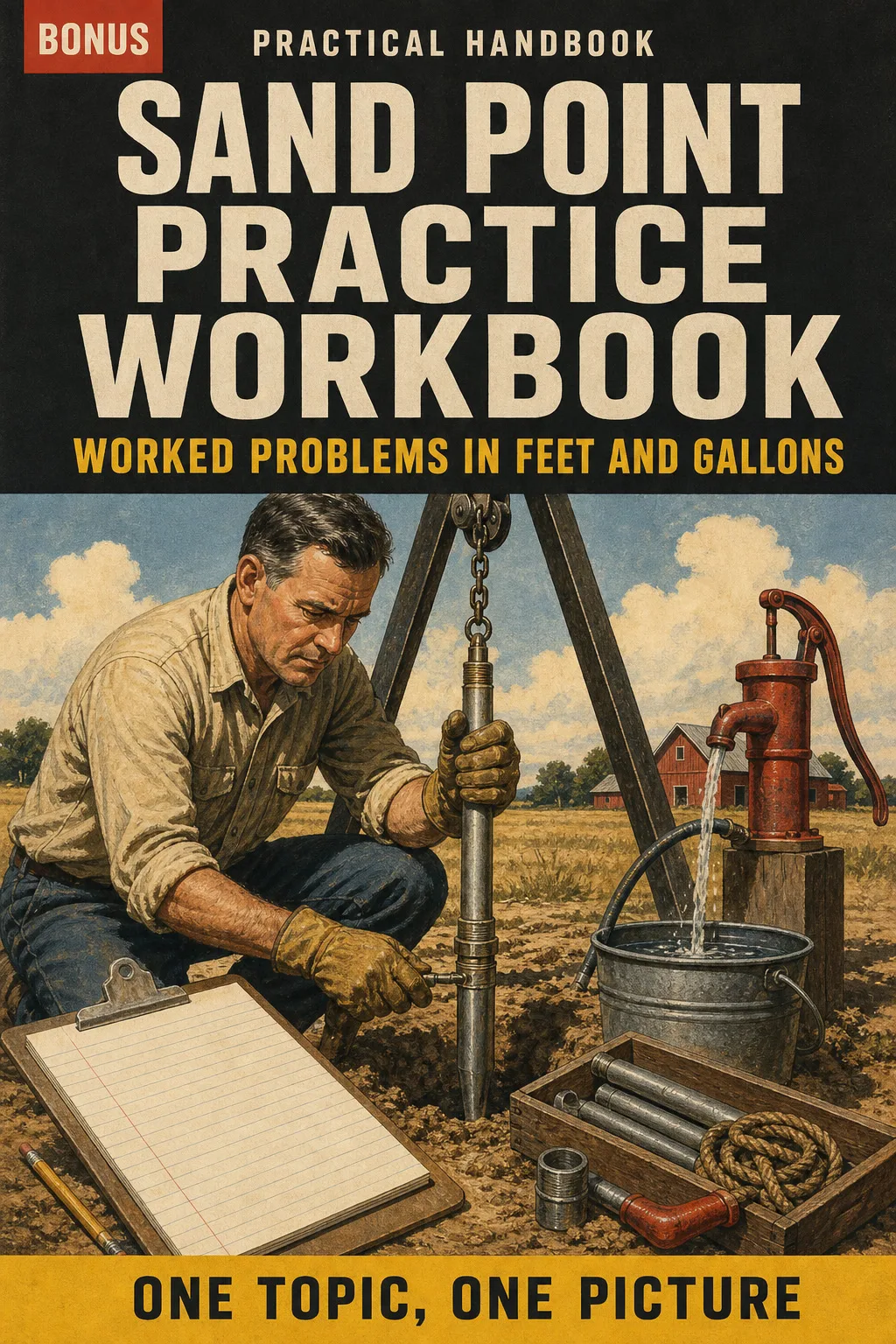
Sand Point Practice Workbook: Worked Problems in Feet and Gallons

BONUS 1: «Sand Point Practice Workbook: Worked Problems in Feet and Gallons»

Value on its own: US$ 17.90

Practice the numbers before you're standing in the yard: depth to water, pipe sections to drive, suction lift and bleach for your well, each one solved step by step.

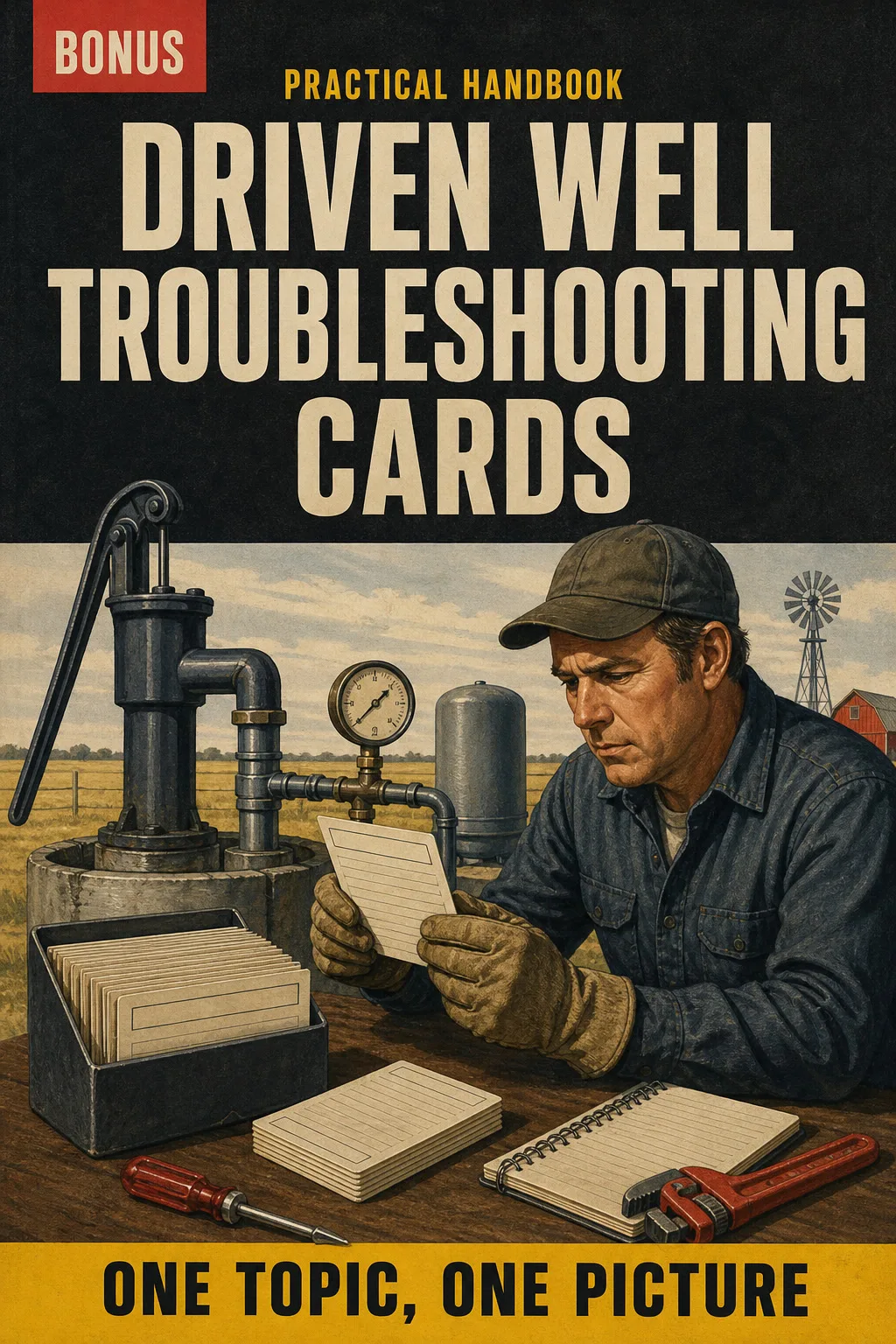
Driven Well Troubleshooting Cards

BONUS 2: «Driven Well Troubleshooting Cards»

Value on its own: US$ 14.90

Printable cards for when something goes wrong: sandy water, the pump won't hold prime, low flow, a point that stops going down. Each card shows the likely cause and what to check first.

Sand Point Well Illustrated with 2 Free Books

  • Sand Point Well Illustrated: 66 illustrated pagesUS$ 63
  • BONUS 1: Sand Point Practice Workbook: Worked Problems in Feet and GallonsUS$ 17.90
  • BONUS 2: Driven Well Troubleshooting CardsUS$ 14.90
  • High-resolution PDF to printIncluded
Total value US$ 95.80
YOUR PRICE:
US$ 27
You save US$ 68.80
YES, I WANT SAND POINT WELL ILLUSTRATED FOR US$ 27

📄 This is a digital PDF book sent to your email: nothing is printed or shipped.

Secure purchaseEncrypted payment30-day guarantee

PDF by email: We email you Sand Point Well Illustrated as a PDF, together with the two free books. It's a single payment: no installments, no extra charges.

Who This Book Is For

You're planning the well

You're planning the well

You see first whether your ground and your county allow a driven well, and you buy the right point, pipe and tools in one trip.

You're driving it this season

You're driving it this season

You keep the book open in the yard: drive, develop, hook up the pump and disinfect, one page at a time, always in the same order.

You already have a driven well

You already have a driven well

Sandy water, a pump that loses prime or low flow: you find the likely cause drawn and check it in order.

Everything You Get Today

US$ 95.80US$ 27
YES, I WANT SAND POINT WELL ILLUSTRATED FOR US$ 27

📄 This is a digital PDF book sent to your email: nothing is printed or shipped.

30DAYS
GUARANTEE

30-Day Guarantee

Try Sand Point Well Illustrated for 30 days, bonus books included.

We refund everything if the file won't open, if the book isn't what you see here, if you were charged twice or if the email doesn't arrive. Just email us.

You pay once. No subscriptions.

Frequently Asked Questions

Is it for me if I've never driven a well before?

Yes. If you can handle a pipe wrench, you can follow it: it starts with whether a driven well works on your ground and goes step by step, every step drawn.

Where does the content come from?

Pump data and disinfection steps are checked against current EPA private well guidance and CDC guidance on disinfecting private wells. Well rules vary by state and county, so every page that touches them tells you what to verify locally.

Is it official material?

No. It's an independent illustrated guide. It's not issued or endorsed by any agency.

Does it replace a licensed well contractor or a lab test?

No. It helps you plan and do the work in order, but it doesn't replace your state and county rules, a licensed contractor where one is required, or a test by a certified lab before you drink the water.

Does it work in my state?

It works anywhere in the US where a shallow driven well is allowed. Rules change by state and county, so Part II shows what to check locally: permits, setbacks from septic and fuel, and who is allowed to do the work.

When and how does it arrive?

The book and the 2 bonus books arrive as PDFs by email, at the address you enter at checkout.

Do I have to pay every month?

No. It's a one-time payment.

Can I have it on paper?

Yes. The PDF is printable, so you can print the pages you need and take them out to the yard.

How does the refund work?

You have 30 days. We refund everything if the file won't open, if the book isn't what you see on this page, if you were charged twice or if the email doesn't arrive: just email us.

Before You Close This Page

No more rewatching videos that contradict each other.

The well point, the pump hookup and the bleach dose: you see them drawn, and that's it.

You get to the yard knowing where every step goes.

Drawings make studying faster.

The book is right below.

One-time payment: US$ 27 · Guarantee: 30 days · PDF by email

YES, I WANT SAND POINT WELL ILLUSTRATED FOR US$ 27

📄 This is a digital PDF book sent to your email: nothing is printed or shipped.